- Author: Raymond
- Category: Insurance Claims
Insurance Claims Knowledge Centre Kenya | Imana
Learn how insurance claims work in Kenya. Find motor, WIBA, travel and medical claim guides, document checklists, delays, complaints and support.
Author: Raymond Momanyi, Founder & CEO, Imana Insurance Agency Kenya Ltd
What Should You Do When You Have an Insurance Claim in Kenya?
A claim is where an insurance policy is tested. The process works best when the insured reports early, preserves evidence and understands who is responsible for each decision.
Protect people first. Report the incident promptly. Preserve evidence. Notify the insurer or insurance intermediary. Do not repair, replace, dispose of damaged property or admit legal liability before receiving guidance.
The exact process depends on the claim. A motor accident may require a police abstract and vehicle assessment. A workplace injury may involve statutory reporting and medical evidence. Travel and medical reimbursement claims depend heavily on receipts, reports, authorisations and policy timelines.
The Imana Insurance Claims Knowledge Centre brings these processes into one place. Use it to find the right guide, understand why claims stall and prepare the documents an insurer may request.
If an incident has already happened, submit an initial notification through the Imana Claims Centre. This does not guarantee that a claim is payable, but early notification helps protect the process.
Imana Insurance Agency Kenya Ltd is a Westlands-based insurance intermediary helping individuals, families and businesses compare insurance quotations from licensed Kenyan insurers across Motor, Medical, WIBA, PSV, Travel, Motorcycle, Corporate and other insurance classes.
Visit www.imana.co.ke or www.mykava.co.ke.
Choose the Right Claims Guide
The Knowledge Centre is organised around 12 practical questions:
- How to file a motor insurance claim
- Documents needed for a motor claim
- What a motor assessor does
- Why insurance claims are delayed
- Why insurance claims are declined
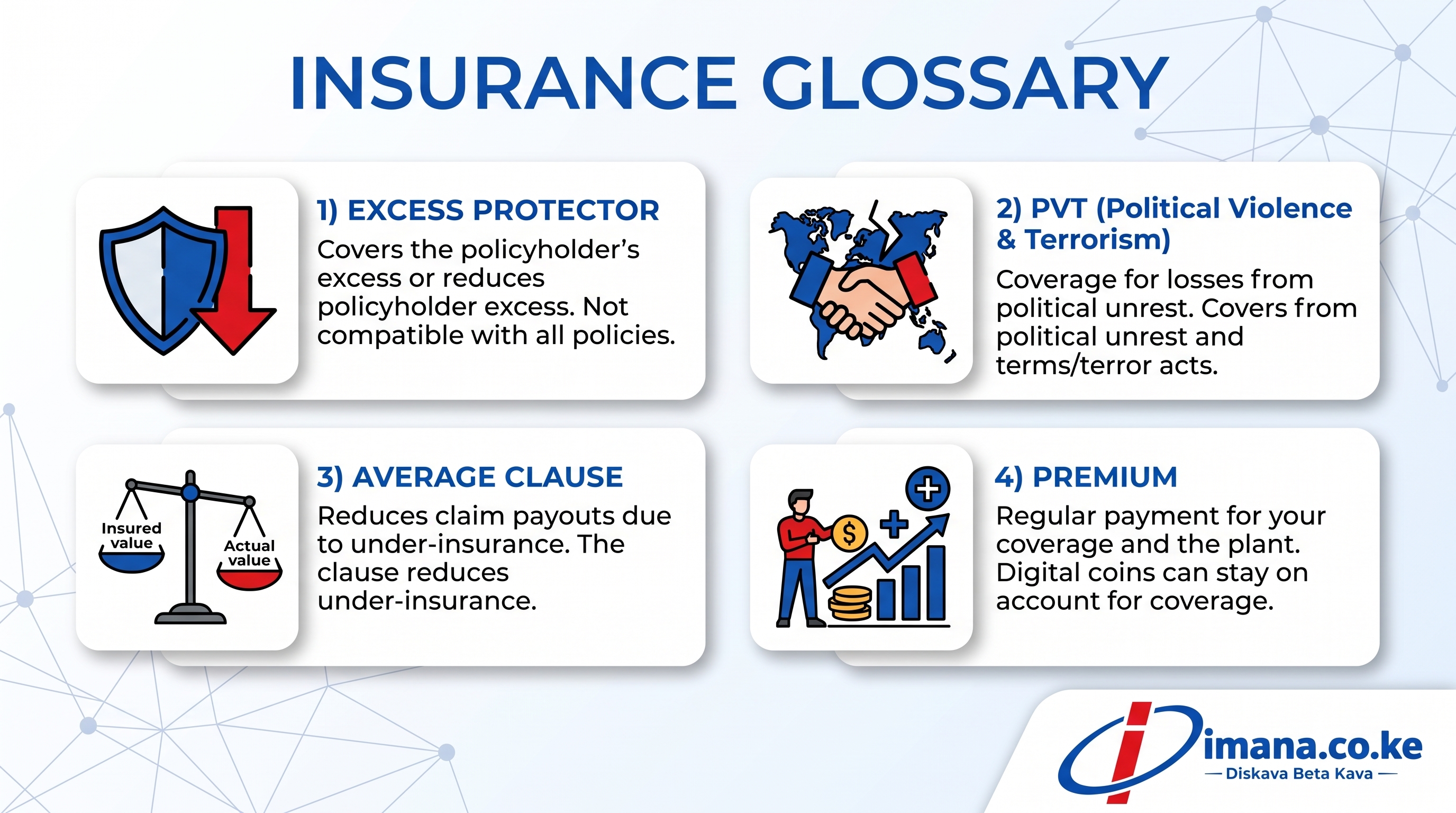
- What an insurance excess means
- How total-loss claims work
- How to file a WIBA claim
- How to file a travel insurance claim
- How medical reimbursement claims work
- How to lodge an insurance complaint
- The role of the insurer versus the insurance agency
Each section below answers one search question and points readers towards the relevant specialist process.
Five Steps to Take Immediately After a Loss
1. Make the situation safe
Seek emergency medical assistance where needed. Take reasonable steps to prevent further injury, damage or loss without placing anyone at risk.
2. Record what happened
Take photographs or video where appropriate. Record the date, time, location, people involved, witnesses and a factual description of the incident. Keep damaged property available for inspection unless safety or public authorities require otherwise.
3. Report to the relevant authority
Motor accidents, theft, injury, crime, workplace incidents and travel emergencies may require reports from the police, employer, medical provider, airline, carrier or another authority. The correct report depends on the event and policy.
4. Notify the insurer or intermediary promptly
Use the contact method shown in the policy documents. Notification should happen within the timeline required by the policy. If Imana arranged the cover, the agency can help identify the insurer, open communication and explain the initial document requirements.
5. Follow written instructions
Complete the claim form accurately. Submit the requested evidence. Keep copies and record when each item was sent. Do not begin repairs, accept a settlement, sign a discharge voucher or dispose of salvage without understanding the consequences.
1. How to File a Motor Insurance Claim
After a road accident, begin with safety and medical assistance. Record the vehicles, damage, registration numbers, drivers, insurers, witnesses and scene. Report the accident to the police and notify the insurer or intermediary as soon as reasonably possible.
The process after notification depends on the cover and circumstances. Comprehensive cover may respond to admissible accidental damage to the insured vehicle. Third Party Only cover does not normally repair the policyholder’s own vehicle. A person whose vehicle was damaged by another motorist may need to pursue a third-party claim against that motorist or insurer.
The insurer may appoint an assessor, investigator, loss adjuster, advocate or other specialist before deciding liability or authorising repairs.
Read the existing Motor Insurance Claim Guide or begin a notification through the Claims Centre.
2. Documents Needed for a Motor Claim
The insurer may request:
- Completed and signed claim form
- Police abstract or other police documents
- Copy of the insurance certificate and policy schedule
- Driver’s licence
- National ID or passport
- Vehicle logbook or ownership record
- Photographs or videos of the scene and damage
- Repair estimate where requested
- Witness or third-party details
- Medical reports and receipts for bodily injury
- Correspondence, demand letters or court documents for liability claims
The list changes for theft, windscreen, third-party injury, own damage and total loss. Submit what is requested for the actual claim; collecting paperwork that does not match the event creates noise rather than progress.
3. What Does a Motor Assessor Do?
A motor assessor independently examines vehicle damage and reports technical findings to the party that appointed the assessor, commonly the insurer. The work can include confirming the apparent cause and extent of damage, evaluating repair methods, checking estimates, identifying pre-existing or unrelated damage, estimating repair cost and considering whether repair remains economical.
The assessor does not usually make the final coverage decision. The insurer considers the assessment together with the policy, accident evidence, liability, documents and any investigation.
An assessment is not the same as a pre-insurance valuation. A valuation estimates vehicle value and condition for insurance placement; a post-accident assessment examines loss and repair economics.
4. Why Are Insurance Claims Delayed?
A claim may be delayed because:
- Notification or documents arrived late
- Forms are incomplete or inconsistent
- Police, medical, airline or employer records are outstanding
- Liability between parties is disputed
- The insurer requires an assessment or investigation
- Repair estimates need review
- Medical treatment or disability has not stabilised
- Ownership, insurable interest or premium status requires confirmation
- A third party has not responded
- The insured has not accepted or clarified proposed settlement terms
Delay does not automatically mean decline. Ask for a written status explaining what remains outstanding, who must provide it and the next expected action.
Read Why Insurance Claims Are Delayed or Declined in Kenya.
5. Why Are Insurance Claims Declined?
An insurer may decline a claim when it determines that the event falls outside the policy. Common reasons include:
- The policy was not active when the event occurred
- The loss is excluded
- The risk or use was described incorrectly
- A policy condition or warranty was breached
- Material information was not disclosed
- The claimed event is not supported by evidence
- The person, property, activity or territory was not insured
- The loss occurred during a waiting period
- The claim is fraudulent or materially misrepresented
A decline should be read against the specific policy wording and facts. Ask the insurer to provide the decision and reasons in writing. If the explanation is unclear, request the clause relied upon and use the complaint process where appropriate.
Read the combined guide on Delayed and Declined Insurance Claims.
6. What Is an Insurance Excess?
An excess is the first portion of an admissible claim that the policyholder must bear. It may be a fixed amount, a percentage, a minimum amount or a combination.
Motor policies can apply different excesses to accidental damage, theft, young or inexperienced drivers and other situations. Excess Protector may protect a specified own-damage excess, but it does not necessarily remove every compulsory excess.
Compare the potential contribution before choosing a quotation. A lower premium paired with a much higher excess may not offer better value.
Read Motor Insurance Excess vs Contribution in Kenya and the Kenya Insurance Glossary.
7. How Do Total-Loss Claims Work?
A vehicle or insured property may be treated as a total loss when it is destroyed, stolen and not recovered, impossible to repair or uneconomic to repair under the insurer’s assessment criteria.
For a motor claim, the insurer may consider the policy basis, insured value, pre-loss value, repair economics, excess, outstanding finance, salvage and other terms. The sum insured is not automatically the amount payable.
If the insurer settles the total loss and takes the salvage, ownership and documents may need to be transferred. If the policyholder retains the salvage, the assessed salvage value may affect settlement. Do not sell or strip a damaged vehicle before receiving written instructions.
8. WIBA Claims Guide
A workplace injury requires immediate care, accurate employer records and prompt reporting through the applicable statutory and insurance processes. The employer should record how, where and when the incident happened, notify the insurer or intermediary and complete the forms required for the injury.
Documents may include the WIBA policy, employee contract, payroll evidence, medical reports, treatment receipts, sick-off records, incident report, witness statements and Directorate of Occupational Safety and Health Services documentation. Fatal, disability and occupational-disease claims may require additional evidence.
The insurer assesses the policy claim, while statutory compensation and reporting follow the Work Injury Benefits Act and applicable procedures.
Read How to File a WIBA or GPA Claim in Kenya and explore WIBA Insurance.
9. Travel Insurance Claims Guide
Contact the emergency-assistance provider shown on the travel policy as soon as an insured emergency occurs. For hospital admission, evacuation or major treatment, pre-authorisation may be required unless the emergency makes prior contact impossible.
Keep reports, receipts and proof from the relevant source. Depending on the claim, this may include medical records, airline confirmations, baggage reports, police reports, travel itinerary, boarding passes, invoices and proof of payment.
Travel claims are often declined when the event was not unforeseen, the destination or activity was excluded, a pre-existing condition was not disclosed, reporting was late or evidence is missing.
Read Reasons a Travel Insurance Claim May Be Declined and explore Travel Insurance.
10. Medical Reimbursement Claims Guide
A reimbursement claim arises when the insured member pays an eligible medical expense and asks the insurer to refund the covered amount. Reimbursement is not automatic merely because treatment occurred.
The insurer may request:
- Completed reimbursement claim form
- Itemised invoices
- Original receipts or acceptable electronic proof
- Doctor’s notes, diagnosis or medical report
- Prescription and pharmacy receipts
- Laboratory or imaging results
- Referral or pre-authorisation where required
- Membership or policy details
- Bank or payment details
Confirm whether the facility was outside the panel, whether cash treatment was permitted, which co-payment or sublimit applies and the deadline for submitting documents.
Explore Health and Medical Insurance.
11. How to Lodge an Insurance Complaint
Begin by writing to the insurer or intermediary and stating:
- Policy and claim reference
- What happened
- The decision, delay or service issue being challenged
- Documents already supplied
- The outcome requested
- A reasonable date for response
Keep the complaint factual and attach evidence. Ask for a written response.
If the issue remains unresolved, the Insurance Regulatory Authority of Kenya handles consumer complaints involving matters such as claim delays, claim denials, disputed liability or settlement amounts. Use the official IRA complaint form and follow its current submission requirements.
This is general process information, not legal advice. Court proceedings, limitation periods and complex liability disputes may require independent legal guidance.
12. What Is the Role of the Insurer vs the Insurance Agency?
The insurer named in the policy carries the accepted insurance risk. It assesses coverage, appoints claims specialists where needed, decides whether the claim is admissible and authorises repair, reimbursement, defence or settlement under the policy.
An insurance agency or intermediary helps the client understand the process, submit documents, communicate with the insurer, follow up outstanding actions and seek clarification. It does not replace the insurer, independently guarantee payment or rewrite the policy after the loss.
Imana’s role is to help clients navigate the claim and keep communication moving. The final claims decision remains with the insurer, subject to the policy, law and available dispute-resolution channels.
What Every Claims File Should Contain
Build one clear file—digital or physical—with:
- Policy schedule and certificate
- Claim reference number
- Completed forms
- Chronology of the event and communications
- Photographs or videos
- Authority reports
- Ownership or identity records
- Medical evidence where relevant
- Receipts, invoices and estimates
- Letters, emails and submitted documents
- Assessment, investigation or settlement correspondence
Name files clearly and keep proof of submission. Good records do not make an excluded claim payable, but poor records can slow down a valid one.
What Not to Do After a Loss
- Do not exaggerate or invent facts
- Do not hide the vehicle’s use, driver, medical history or business activity
- Do not repair before inspection where approval is required
- Do not discard damaged property without guidance
- Do not admit liability or negotiate a third-party settlement carelessly
- Do not ignore demand letters or court documents
- Do not sign a discharge voucher without understanding it
- Do not assume silence means approval
Accuracy builds trust. A claim file should tell one consistent, evidence-backed story.
Frequently Asked Questions
Where can I report an insurance claim through Imana?
Use the Imana Claims Centre or the contact details shown in your policy documents. Provide the policy or registration number, incident date and a factual description.
Does notifying a claim mean it has been approved?
No. Notification opens the process. The insurer still assesses whether the event is covered and whether the policy conditions have been met.
Who pays an insurance claim arranged through an agency?
The insurer named in the policy handles admissible claim payment or authorised repair. The agency supports communication and follow-up.
How long does an insurance claim take in Kenya?
There is no honest single timeline for every claim. A straightforward, fully documented claim may move faster than one involving injury, disputed liability, fraud concerns, missing evidence, recovery from another party or continuing medical treatment.
Can I repair my car immediately after an accident?
Emergency steps to prevent further damage may be reasonable, but permanent repairs should not begin before the insurer’s required inspection or written authority. Ask first.
Why does the insurer need more documents after I submit a claim form?
The claim form begins the file. Additional evidence may be needed to confirm the event, ownership, cause, loss amount, liability and compliance with the policy.
Can Imana guarantee that my claim will be paid?
No intermediary should guarantee an outcome it does not control. Imana can help present documents, follow up and request clear explanations. The insurer determines admissibility under the policy.
What should I do if my claim is declined?
Request the decision and reasons in writing, compare them with the policy wording, submit any missing or corrective evidence, use the insurer’s complaint process and escalate to the IRA where appropriate.
Connect Product Pages to the Claims Knowledge Centre
Trust should not begin after the accident. Every relevant product page should link to the guide that explains what happens after a loss:
- Motor and PSV pages should link to motor filing, documents, assessor, excess and total-loss guides.
- WIBA and corporate pages should link to the WIBA claims guide.
- Travel pages should link to the travel claims guide.
- Medical pages should link to medical reimbursement guidance.
- Every product and comparison page can link to delayed or declined claims, complaints, and insurer-versus-agency roles where relevant.
The claims guide should also link back to the product page and quotation page. That two-way structure helps readers move from buying to understanding and from a claim back to better cover at renewal.
Start an Insurance Claim or Request Support
Imana Insurance Agency Kenya Ltd
4th Floor, Krishna Centre, Woodvale Grove, Westlands, Nairobi
Call/WhatsApp: +254 796 209 402
www.imana.co.ke | www.mykava.co.ke
Submit an initial notification through the Imana Claims Centre.
Insurance becomes real at claim time. Report early. Keep evidence. Read the policy. Ask for written answers.
Disclaimer: This Knowledge Centre provides general educational information and does not replace a policy, legal advice, medical advice, statutory forms or instructions from an insurer or public authority. Claim requirements vary by insurer, policy and circumstances. The insurer named in the policy determines admissibility and settlement subject to the contract and applicable law.