- Author: Raymond
- Category: Travel The World
How to Plan and Book a Kenya Safari
Learn how to plan and book a Kenya safari, including destinations, transport, accommodation, park fees, travel insurance and practical booking tips.
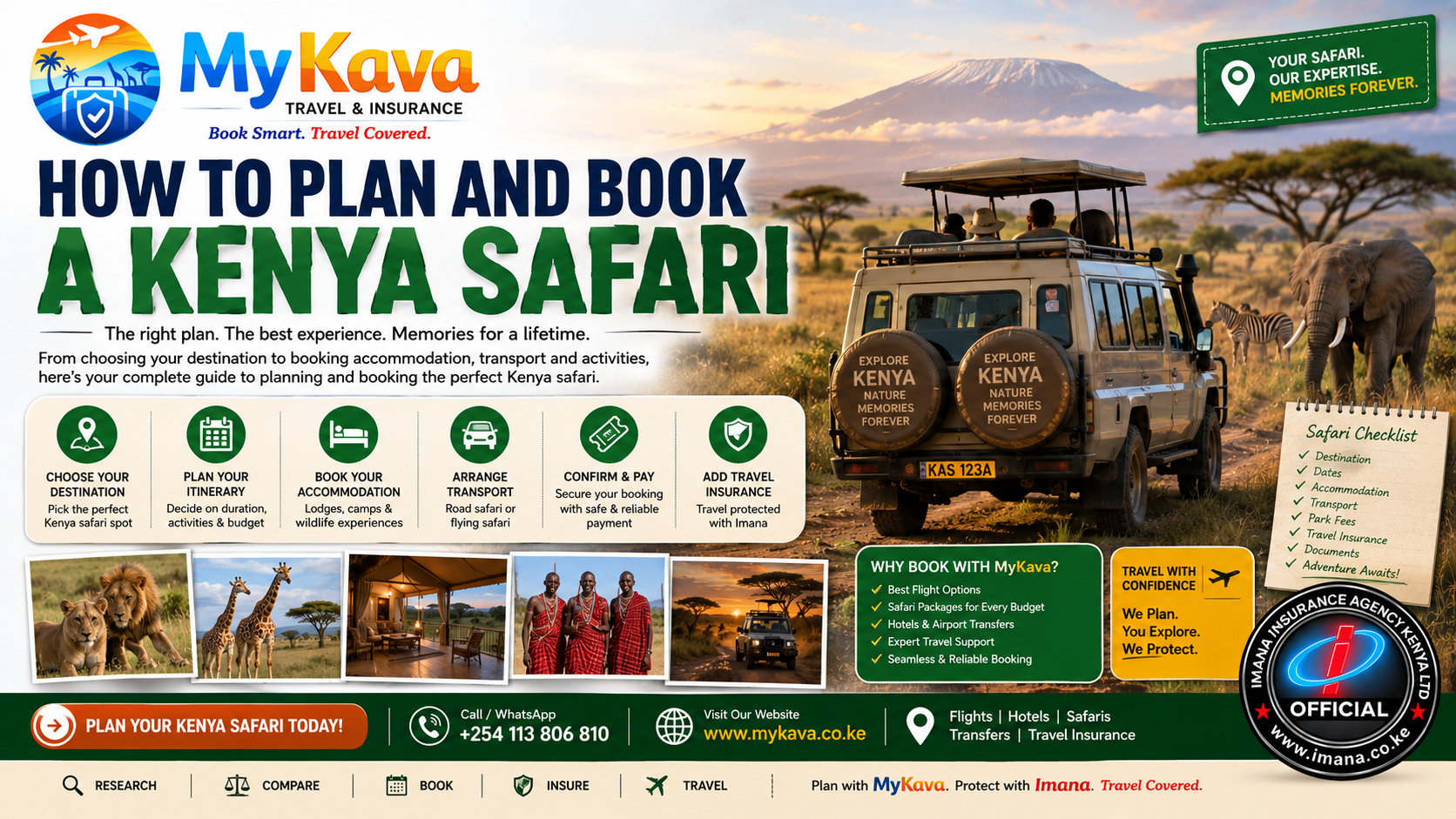
Planning and booking a Kenya safari begins with choosing the right destination, travel dates, number of days, transport method, accommodation level and realistic budget.
You must also account for park conservation fees, meals, game drives, airport or hotel transfers, identification requirements and travel insurance. A safari quotation should clearly explain what is included and what you will still need to pay separately.
Kenya can be visited throughout the year, although weather, wildlife movement, accommodation prices and visitor numbers vary by season. Kenya’s official tourism platform describes the country as a year-round destination supported by its favourable equatorial climate. (Magical Kenya)
MyKava Travel & Insurance can help travellers compare safari options, accommodation, flights and transfers. Imana Insurance Agency Kenya Ltd can assist with local or international travel insurance for the journey.
Why Choose Kenya for a Safari?
Kenya offers much more than one safari destination.
Travellers can experience:
- Open savannahs
- Mountain landscapes
- Lakes and wetlands
- Forests
- Desert and semi-arid scenery
- Wildlife conservancies
- National parks
- Game reserves
- Cultural experiences
- Indian Ocean beach extensions
This variety makes it possible to plan:
- A one-day safari from Nairobi
- A weekend getaway
- A family holiday
- A honeymoon
- A photography safari
- A school or educational trip
- A corporate retreat
- A luxury flying safari
- A budget road safari
- A combined bush-and-beach holiday
Kenya’s official tourism platform promotes wildlife, landscapes and safari experiences across different parts of the country rather than treating safari as one standard product. (Magical Kenya)
Step 1: Decide What Kind of Safari You Want
Before asking for prices, establish what you want from the journey.
Wildlife safari
This is the traditional game-viewing experience involving drives through a national park, reserve or conservancy.
It may focus on:
- Lions
- Elephants
- Rhinos
- Leopards
- Buffaloes
- Giraffes
- Zebras
- Antelopes
- Birdlife
Family safari
A family safari should consider:
- Children’s ages
- Driving time
- Family rooms
- Child-friendly meals
- Swimming pools
- Shorter game drives
- Washroom stops
- Medical support
- Safe accommodation
A low-cost itinerary with extremely long road journeys may not be the most suitable option for young children.
Romantic or honeymoon safari
Couples may prioritise:
- Private transfers
- Intimate lodges or tented camps
- Scenic accommodation
- Private game drives
- Special meals
- Bush breakfasts
- Beach extensions
- Flexible itineraries
Photography safari
Photography-focused travellers may need:
- Fewer people per vehicle
- Window seats
- Experienced guides
- Longer game drives
- Suitable sunrise and sunset schedules
- Equipment charging
- Extra luggage allowance
- Private or semi-private vehicles
Adventure safari
An adventure itinerary may combine wildlife viewing with:
- Hiking
- Cycling
- Walking safaris
- Camping
- Mountain activities
- Rock climbing
- Nature trails
Specific activities may require separate permits, guides or fees. KWS lists special activities separately from standard park entry on its booking platform, so these costs should be confirmed before travel. (Kwspay)
Corporate or group safari
Group safaris may be organised for:
- Staff retreats
- Team-building trips
- Conferences
- Religious groups
- Schools
- Family reunions
- Associations
- Social clubs
Group planning requires clear rooming lists, payment deadlines, transport capacity and cancellation conditions.
Step 2: Choose the Right Kenya Safari Destination
The best destination depends on the animals, scenery, activities, travel time and budget you prefer.
Maasai Mara National Reserve
The Maasai Mara is one of Kenya’s best-known safari destinations.
It may suit travellers looking for:
- Big-cat sightings
- Open savannah scenery
- Large concentrations of wildlife
- Luxury camps
- Tented accommodation
- Photography
- Multi-day safaris
A Mara safari usually deserves more than a rushed single-day road trip from Nairobi because of the travel distance and the value of having enough time for game drives.
Amboseli National Park
Amboseli is widely associated with elephant herds, open plains and views of Mount Kilimanjaro.
KWS describes Amboseli as a leading destination for close encounters with large elephant herds, with grasslands, woodlands, swamps and rich birdlife. (KWS)
It may suit:
- Families
- First-time safari travellers
- Photographers
- Short road safaris from Nairobi
- Travellers interested in elephants and scenery
Tsavo East and Tsavo West
Tsavo offers extensive landscapes and can work well for travellers combining a safari with Mombasa, Diani, Watamu or another coastal destination.
Tsavo West includes springs, lava landscapes, hills, rivers and broad savannah areas, according to KWS. (KWS)
Choose Tsavo for:
- Expansive wilderness
- Longer safari itineraries
- Bush-and-beach combinations
- Road trips between Nairobi and the coast
- Less compressed game-viewing routes
Lake Nakuru National Park
Lake Nakuru is known for scenery, birdlife and rhino conservation.
KWS describes the park as a sanctuary for both black and white rhinos and as a rewarding birdwatching destination. (KWS)
It may suit:
- Weekend safaris
- Birdwatchers
- Family trips
- Travellers combining Nakuru with Naivasha
- Short Rift Valley itineraries
Nairobi National Park
Nairobi National Park offers wildlife viewing close to the capital.
It may suit:
- Travellers with limited time
- Stopover visitors
- Corporate groups
- Residents planning a day trip
- Families seeking a short safari
- Travellers arriving or departing through Nairobi
The park operates under KWS visitor rules, including remaining on established roads, avoiding wildlife disturbance and maintaining a safe viewing distance. (KWS)
Samburu
Samburu offers distinctive northern landscapes and wildlife.
Official Magical Kenya safari content highlights species such as Grevy’s zebra, reticulated giraffe and Somali ostrich in the Samburu area. (ziara.magicalkenya.com)
It may suit:
- Repeat safari travellers
- Photographers
- Travellers seeking different landscapes
- Longer northern Kenya itineraries
- Luxury or conservancy experiences
Meru National Park
Meru can appeal to travellers looking for a quieter and less conventional safari.
It may be combined with:
- Nanyuki
- Mount Kenya
- Laikipia
- Samburu
- Other northern circuit destinations
Hell’s Gate National Park
Hell’s Gate is known for dramatic Rift Valley scenery and adventure-oriented activities.
KWS describes it as combining adventure, wellness and striking landscapes. (KWS)
It may work well for:
- Day trips
- Couples
- Groups
- Active travellers
- Naivasha itineraries
Mount Kenya and Nanyuki
This region can combine:
- Mountain scenery
- Wildlife conservancies
- Nature activities
- Cultural experiences
- Hiking
- Relaxation
- Equator visits
Magical Kenya presents Nanyuki as a base for experiences such as the Equator, Ngare Ndare Forest and other outdoor activities. (Magical Kenya)
Step 3: Decide How Many Days You Need
The number of days should reflect travel distance—not only your available leave days.
One-day safari
Suitable options may include:
- Nairobi National Park
- Nairobi Safari Walk
- Selected Naivasha activities
- Short excursions near your location
A day trip should have realistic departure and return times.
Two-day safari
A two-day safari may suit:
- Amboseli
- Lake Nakuru
- Naivasha
- Short nearby destinations
However, significant driving time can reduce actual game-viewing time.
Three-day safari
A three-day, two-night itinerary is one of the most practical structures for a single destination.
It may include:
- Travel and evening game drive on day one
- Full-day game viewing on day two
- Morning activity and return on day three
Official Kenya tourism packages commonly use this format for destinations such as Amboseli. (ziara.magicalkenya.com)
Four to seven days
This duration allows travellers to combine destinations, such as:
- Maasai Mara and Lake Nakuru
- Amboseli and Tsavo
- Samburu and Nanyuki
- Nairobi, Naivasha and Maasai Mara
- Safari and coastal holiday
Avoid creating an itinerary that changes accommodation every night unless the traveller specifically wants a fast-moving road trip.
Step 4: Choose Between a Road Safari and Flying Safari
Road safari
A road safari uses a safari van, four-wheel-drive vehicle or other suitable transport.
Advantages
- Usually more affordable
- Scenic travel between destinations
- Flexible stops
- Suitable for groups
- Easier luggage handling
- Can combine several destinations
Considerations
- Longer travel time
- Road conditions vary
- Early departures may be required
- Vehicle comfort matters
- Some routes can be tiring
Ask what type of vehicle will be used and how many passengers it will carry.
Flying safari
A flying safari uses scheduled or charter flights to reach an airstrip near the destination.
Advantages
- Saves road-travel time
- Suitable for short luxury trips
- Offers scenic aerial views
- Can improve comfort
- Allows more time at the destination
Considerations
- Higher price
- Strict baggage limits
- Possible soft-bag requirements
- Airport and airstrip transfers
- Schedule changes due to operational conditions
- Separate transfer coordination
MyKava can compare available flight and road-transfer combinations based on the itinerary.
Step 5: Choose Your Safari Accommodation
Safari accommodation differs significantly in comfort, privacy, location and price.
Budget accommodation
This may include:
- Basic lodges
- Public campsites
- Simple tented camps
- Accommodation outside the park
- Shared facilities in some properties
It may suit travellers who prioritise wildlife viewing over luxury.
Mid-range accommodation
This may include:
- Comfortable lodges
- Permanent tented camps
- Private bathrooms
- Restaurant meals
- Swimming pools
- Organised game drives
This category often provides a useful balance between price and comfort.
Luxury accommodation
Luxury safari properties may offer:
- Spacious suites
- Private verandas
- Premium locations
- Fine dining
- Private vehicles
- Butler or host services
- Bush meals
- Spa facilities
- Air transfers
The term “luxury” is subjective. Compare actual room features and inclusions rather than relying only on the label.
Inside vs outside the park
Accommodation inside a park or reserve may offer:
- Faster access to game-viewing areas
- Less travel time at the start of the day
- Immersive surroundings
Accommodation outside may offer:
- Lower prices
- More property options
- Access to towns and other activities
However, daily gate-entry times and transfer distances should be considered.
Step 6: Understand Safari Meal Plans
Common meal-plan descriptions include:
Bed and breakfast
Includes accommodation and breakfast.
Other meals are paid separately.
Half board
Usually includes breakfast and either lunch or dinner.
Confirm which meal is included.
Full board
Usually includes:
- Breakfast
- Lunch
- Dinner
Drinks, snacks and special activities may still cost extra.
All-inclusive
May include meals, selected drinks and some activities, but definitions differ between properties.
Ask for a written list of exactly what “all-inclusive” covers.
Step 7: Build a Realistic Safari Budget
A complete safari budget may include:
- Transport
- Fuel
- Driver-guide
- Accommodation
- Meals
- Park or reserve fees
- Vehicle-entry charges
- Game drives
- Activities
- Airport transfers
- Flights
- Travel insurance
- Tips
- Drinks
- Personal expenses
- Optional excursions
- Payment charges
Do not compare two safari prices without comparing their inclusions.
One quotation may include park fees, while another excludes them. One may include a private vehicle, while another assumes a shared vehicle.
Understanding Park Entry and Conservation Fees
Park fees differ according to:
- Destination
- Citizenship or residency category
- Adult or child classification
- Date of travel
- Activities
- Vehicle or camping arrangements
KWS requires visitors to provide valid identification at park entry, and its booking pages distinguish among East African citizens, Kenya residents, African citizens and non-residents. (Kwspay)
For KWS-managed parks, self-organised travellers can pay through the KWSPay platform. KWS states that package-tour operators normally include park entry fees in the total package, while independent travellers can pay through KWSPay using available methods such as M-Pesa, card or bank transfer. (KWS)
Because conservation fees can change, request the current fee at the time of booking rather than relying on an old screenshot or previous quotation.
Step 8: Confirm What the Safari Package Includes
Before paying, request written confirmation of the following.
Transport
Confirm:
- Pick-up point
- Drop-off point
- Vehicle type
- Shared or private vehicle
- Passenger capacity
- Airport transfer arrangements
- Whether transport is available throughout the safari
Accommodation
Confirm:
- Property name
- Room type
- Number of nights
- Occupancy
- Check-in and check-out dates
- Meal plan
- Child-sharing arrangements
Game drives
Confirm:
- Number of game drives
- Approximate duration
- Shared or private arrangement
- Full-day or split game drives
- Guide services
Park fees
Ask whether conservation and entry fees are:
- Included
- Excluded
- Payable directly
- Subject to change
Meals and drinks
Confirm:
- Included meals
- Drinking water
- Soft drinks
- Alcoholic drinks
- Special-diet arrangements
Extra activities
Establish whether activities such as guided walks, cycling, cultural visits or special tracking experiences are included or charged separately.
Step 9: Check the Safari Operator or Booking Consultant
Do not send money merely because a social-media page has attractive wildlife photographs.
Before booking:
- Confirm the business name
- Review official contact information
- Request a formal quotation
- Check cancellation terms
- Confirm the accommodation directly where necessary
- Use approved payment channels
- Request a receipt
- Check what happens if travel dates change
- Keep written correspondence
The quotation should clearly identify the traveller, itinerary, accommodation and services being purchased.
Step 10: Consider Travel Insurance
A safari can involve significant prepaid expenses.
Depending on the selected policy, travel insurance may protect eligible travellers against:
- Emergency medical treatment
- Accidental injury
- Trip cancellation
- Trip curtailment
- Delayed departure
- Lost or delayed luggage
- Emergency evacuation
- Repatriation
- Personal accident
- Personal liability
Travel insurance does not cover every cancellation or disruption. The cause must fall within the policy terms.
Arrange cover early, especially where cancellation benefits are required.
Learn more through Imana Travel Insurance.
Local Travel Insurance for a Kenya Safari
Kenyan residents sometimes assume travel insurance is only for flights abroad.
However, a local safari may involve:
- Long-distance road travel
- Domestic flights
- Prepaid accommodation
- Remote destinations
- Medical evacuation needs
- Luggage
- Group travel
- Outdoor activities
A suitable domestic travel policy may provide selected protection, depending on the insurer and journey.
Ask Imana whether the proposed policy covers:
- Domestic travel
- The safari destination
- Planned activities
- Children
- Senior travellers
- Medical evacuation
- Trip cancellation
- Personal accident
Step 11: Prepare the Right Safari Clothing and Equipment
A practical safari packing list may include:
- Comfortable neutral-coloured clothing
- Warm layer for early mornings
- Light clothing for daytime
- Comfortable closed shoes
- Hat
- Sunglasses
- Sunscreen
- Reusable water bottle
- Binoculars
- Camera
- Charging cables
- Power bank
- Personal medication
- Identification
- Travel documents
- Small day bag
- Rain jacket where appropriate
Avoid overpacking, particularly for flying safaris with limited luggage allowances.
Step 12: Follow Park Safety and Conservation Rules
Wild animals should be observed responsibly.
KWS visitor guidance includes remaining on established roads, avoiding feeding wildlife, maintaining distance, keeping noise low and remaining inside the vehicle except in designated areas. (KWS)
Travellers should:
- Follow the guide’s instructions
- Avoid approaching animals
- Keep doors closed where required
- Never feed wildlife
- Avoid loud music
- Dispose of waste responsibly
- Respect park-opening and closing times
- Avoid off-road driving where prohibited
- Supervise children
- Use designated stopping areas
A safari is a visit to a wildlife habitat—not a controlled amusement park.
Sample Three-Day Kenya Safari Itinerary
Day 1: Nairobi to destination
- Morning pick-up
- Travel to the park or reserve
- Stop along the route where appropriate
- Check in
- Lunch
- Afternoon or evening game drive
- Dinner and overnight stay
Day 2: Full safari experience
- Early breakfast
- Morning game drive
- Lunch
- Afternoon game drive or full-day excursion
- Optional activity
- Dinner and overnight stay
Day 3: Return journey
- Early morning game drive where available
- Breakfast
- Check out
- Return to Nairobi or continue to the next destination
- Drop-off at the agreed location
The exact structure should depend on travel distance, park hours and accommodation arrangements.
How to Book a Kenya Safari Through MyKava
Step 1: Share your travel details
Provide:
- Preferred destination
- Travel dates
- Number of adults
- Number and ages of children
- Number of days
- Budget range
- Accommodation preference
- Road or air travel
- Pick-up location
- Special requirements
Step 2: Receive a proposed itinerary
MyKava can structure an itinerary around the available time, budget and preferred experience.
Step 3: Review the inclusions
Check the accommodation, transport, meals, fees and activities.
Step 4: Request adjustments
You may adjust:
- Destination
- Number of nights
- Hotel category
- Travel method
- Room arrangement
- Activities
- Budget
Step 5: Confirm the booking
Submit accurate traveller details and pay through the approved channel before the stated deadline.
Step 6: Receive the travel documents
Keep the confirmed itinerary, receipts, hotel vouchers and emergency contacts.
Step 7: Arrange insurance
Contact Imana for a travel insurance comparison based on the safari dates and traveller details.
Information Needed for a Kenya Safari Quotation
Send MyKava:
- Full travel dates
- Number of travellers
- Children’s ages
- Preferred destination
- Number of nights
- Estimated budget
- Road or flying safari
- Pick-up point
- Accommodation category
- Kenyan citizen, resident or non-resident status
- Meal preferences
- Special activities
- Mobility or accessibility requirements
Citizenship and residency information matters because parks use different visitor categories and may require identification at entry. (Kwspay)
Kenya Safari Booking Checklist
Before paying, confirm:
- Destination and travel dates
- Number and ages of travellers
- Pick-up and drop-off locations
- Road or air transport
- Vehicle type and passenger capacity
- Accommodation property
- Room category
- Meal plan
- Number of game drives
- Park fees included or excluded
- Optional activities
- Child rates
- Cancellation terms
- Payment deadline
- Baggage restrictions
- Identification requirements
- Emergency contacts
- Travel insurance
- Final written itinerary
Common Safari Booking Mistakes
Choosing too many destinations
Trying to visit several distant parks in a few days can turn the safari into an exhausting road trip.
Comparing only the total price
A cheaper quotation may exclude conservation fees, meals or transport.
Ignoring children’s ages
Child rates and room arrangements may depend on age.
Booking the wrong season for your expectations
Kenya is open year-round, but weather, animal movement and visitor density vary.
Underestimating driving time
Road distances may take longer than expected.
Failing to confirm the vehicle type
A crowded vehicle can affect comfort and wildlife viewing.
Ignoring cancellation terms
Hotels, flights and park arrangements may have different cancellation conditions.
Travelling without suitable insurance
Prepaid safari expenses and remote travel can create financial exposure when an insured emergency occurs.
Frequently Asked Questions
How much does a Kenya safari cost?
The cost depends on destination, number of days, accommodation level, transport, park fees, number of travellers and season. Request a quotation based on your actual dates and preferences.
Can Kenyan residents book local safari packages?
Yes. MyKava can help plan safaris for Kenyan citizens, residents, expatriates and international visitors.
What is the best time to go on safari in Kenya?
Kenya can be visited throughout the year. The most suitable period depends on the destination, weather preference, wildlife expectations, budget and crowd tolerance. (Magical Kenya)
Is a two-day Maasai Mara safari enough?
It is possible, but road travel can consume much of the available time. A three-day itinerary generally provides more useful game-viewing time.
Can I book a one-day safari from Nairobi?
Yes. Nairobi National Park and selected nearby destinations can work for day trips.
Are park fees included in safari packages?
They may be included or excluded. KWS states that package-tour operators generally include park-entry fees in the package total, but travellers should verify this in writing. (KWS)
Can MyKava arrange safari accommodation only?
Accommodation-only arrangements may be available depending on the destination and property.
Can MyKava arrange domestic flights?
MyKava can assist with available local and international flight options, subject to route and schedule availability.
Do I need travel insurance for a local safari?
It may not always be compulsory, but suitable domestic travel insurance can provide useful protection against specified medical and journey-related risks.
Can families with children go on safari?
Yes. Choose a child-friendly itinerary with reasonable driving times, suitable rooms and age-appropriate activities.
What identification is needed at the park?
Valid identification is required to support the visitor category used for booking. KWS booking pages state that identification must be produced at the gate. (Kwspay)
Can I pay KWS park fees online?
Yes. KWS provides an online KWSPay process for park applications, visitor and vehicle details, activities, payment and ticket issuance. (KWS Ecitizen)
Book Your Kenya Safari with MyKava
Planning a family safari, romantic getaway, corporate retreat or weekend escape?
Send MyKava Travel & Insurance:
- Your preferred travel dates
- Destination
- Number of travellers
- Children’s ages
- Number of nights
- Budget range
- Accommodation preference
- Pick-up location
MyKava can help coordinate:
- Safari planning
- Accommodation
- Road or air travel
- Airport transfers
- Local and international flights
- Group travel
- Corporate travel
Visit MyKava Travel & Insurance to begin your safari enquiry.
Protect the Journey Through Imana
Imana Insurance Agency Kenya Ltd can assist with:
- Local travel insurance
- International travel insurance
- International medical insurance
- Personal accident protection
- Medical evacuation benefits
- COMESA Yellow Card Insurance for cross-border road trips
Visit Imana Insurance Agency Kenya Ltd or review Imana Travel Insurance.
Plan with MyKava. Protect with Imana.
Planning a local or international journey?
MyKava Travel & Insurance can help you compare flights, arrange hotel accommodation, book airport transfers and plan local safaris.
Imana Insurance Agency Kenya Ltd can help you arrange travel insurance, international medical insurance and COMESA Yellow Card Insurance.
Research → Compare → Book → Insure → Travel
Choose the destination. Build the itinerary. Understand the price. Book smart. Travel covered.
Safari prices, accommodation availability, transport schedules, park fees and entry conditions can change. Confirm the final itinerary, inclusions and current official requirements before making payment.
Date published: 6 August 2026