- Author: Raymond
- Category: International Travel
How to Plan a Maasai Mara Safari in Kenya
A Maasai Mara safari is one of those trips that stays with you.
The open savannah, wildlife sightings, dramatic sunsets, game drives, luxury camps, family moments, group memories and the possibility of seeing the Great Migration all make the Maasai Mara one of Kenya’s most iconic travel destinations.
But a great safari does not happen by guesswork. It needs planning.
You need to know when to travel, where to stay, how to get there, what park fees apply, how game drives are arranged, whether travel insurance is necessary, and how to confirm that you are booking through trusted suppliers.
Whether you are planning a family safari, couple’s getaway, group trip, corporate retreat, photography safari or first-time visit to the Mara, this guide will help you prepare better.
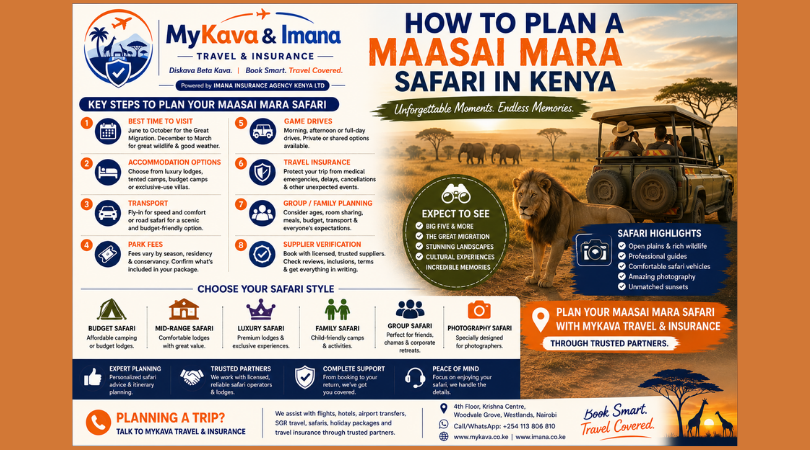
1. Choose the Best Time to Visit Maasai Mara
The Maasai Mara can be visited throughout the year, but the best time depends on the type of experience you want.
The dry season is popular because wildlife viewing can be easier when grass is shorter and animals gather near water sources. This period is also preferred by travellers who want a smoother safari experience with less rain interruption.
The Great Migration season is one of the busiest times in the Mara. Many travellers plan their safari around the movement of wildebeest and zebras between the Serengeti and Maasai Mara. During this period, demand for accommodation, transport and game drive slots can be high.
The green season can also be beautiful. The landscape is fresh, the scenery is greener, and accommodation may sometimes be more affordable depending on the supplier and travel dates. It can be a good option for travellers who want a quieter safari experience.
Before choosing your travel dates, consider:
- Weather
- Wildlife viewing expectations
- Budget
- Accommodation availability
- School holidays
- Public holidays
- Group size
- Road conditions
- Migration season demand
If your dates are flexible, ask your travel partner to compare different periods so you can balance experience and budget.
2. Decide the Type of Safari Experience You Want
Not every Maasai Mara safari is the same.
Some travellers want luxury and privacy. Others want a budget-friendly trip. Some want a family-friendly lodge, while others prefer a tented camp close to nature.
Before booking, decide the kind of experience you want.
You may choose:
- Budget safari
- Mid-range safari
- Luxury safari
- Family safari
- Honeymoon safari
- Group safari
- Corporate retreat
- Photography safari
- Fly-in safari
- Road safari
A couple may prefer a quiet tented camp with beautiful views and intimate dining. A family may need child-friendly accommodation, safe spaces and flexible meal options. A group may need shared transport, meeting spaces, team-building options and accommodation that can handle many travellers.
The clearer your travel style, the easier it becomes to choose the right safari package.
3. Compare Accommodation Options
Accommodation is one of the biggest parts of your Maasai Mara safari budget.
The Mara offers different accommodation options, including:
- Safari lodges
- Tented camps
- Luxury camps
- Budget camps
- Family-friendly camps
- Conservancy camps
- Private villas or exclusive-use options
- Hotels outside the reserve area
When comparing accommodation, do not look at price alone.
Check what is included in the package. Some lodges and camps may include meals, game drives, park fees, airstrip transfers or selected activities. Others may charge these separately.
Before booking, confirm:
- Room type
- Meal plan
- Check-in and check-out times
- Distance from the reserve or conservancy
- Game drive arrangements
- Vehicle type
- Child policy
- Cancellation terms
- Payment terms
- Whether park fees are included
- Whether transport is included
- Whether travel insurance is included or separate
A cheaper camp may become expensive if transport, park fees, meals and activities are charged separately. A higher-priced package may offer better value if it includes more services.
4. Plan Your Transport to Maasai Mara
There are two main ways to travel from Nairobi to Maasai Mara: by road or by air.
Road Transport
A road safari is a popular option for families, groups and budget-conscious travellers. It allows you to enjoy the journey, stop along the way and travel together as a group.
Road transport may involve a safari van, 4x4 land cruiser or other suitable vehicle depending on the package.
When planning road transport, confirm:
- Vehicle type
- Number of passengers
- Luggage space
- Pick-up point
- Departure time
- Driver-guide details
- Route
- Stopovers
- Road condition expectations
- Whether the vehicle is suitable for game drives
A safari vehicle should be comfortable, reliable and appropriate for the terrain.
Fly-In Safari
A fly-in safari is suitable for travellers who want to save time and arrive fresh. Flights usually connect from Nairobi to airstrips near different Mara camps and lodges.
This option can work well for honeymooners, luxury travellers, business travellers with limited time, elderly travellers or families who prefer shorter travel time.
When comparing fly-in options, confirm:
- Flight schedule
- Baggage allowance
- Airstrip transfer
- Camp location
- Return flight timing
- Weather-related flexibility
- Total cost
Your transport choice should match your time, budget, comfort level and group needs.
5. Understand Park Fees and Conservancy Fees
Park fees are an important part of Maasai Mara safari planning.
Fees may vary depending on whether you are a Kenyan citizen, resident, non-resident, adult, child or student. Rates may also differ depending on season, reserve section, conservancy and the number of days you are entering.
Some accommodation packages include park fees. Others quote accommodation separately and require park fees to be paid in addition.
Before confirming your safari, ask:
- Are park fees included in the package?
- Are conservancy fees included?
- Are fees charged per person, per day or per entry?
- Do child rates apply?
- Are there different rates for citizens, residents and non-residents?
- What documents are required to qualify for resident or citizen rates?
- Are there vehicle entry fees?
- Are there guide or ranger fees?
- What happens if we enter the park on multiple days?
This is one area where assumptions can cost you money.
Always request a clear breakdown before paying.
6. Plan Your Game Drives Properly
Game drives are the heart of a Maasai Mara safari.
A typical safari may include morning game drives, afternoon game drives or full-day game drives with packed lunch. The structure depends on your accommodation, package, park rules, weather and traveller preferences.
Morning game drives are popular because animals may be more active before the day becomes hot. Afternoon game drives can offer beautiful lighting and sunset views.
Before booking, confirm:
- Number of game drives included
- Whether game drives are shared or private
- Vehicle type
- Maximum passengers per vehicle
- Whether the driver is a guide
- Game drive duration
- Whether packed lunch is included for full-day drives
- Whether children are allowed
- Whether night game drives are available where permitted
- Whether balloon safaris are optional
A private game drive gives more flexibility, especially for photographers, families and couples. Shared game drives may reduce costs but require travellers to follow a group schedule.
7. Consider Travel Insurance
Many people think travel insurance is only for international trips. But insurance can still be useful when planning a local safari, especially when the trip involves flights, accommodation bookings, road travel, medical risk, cancellations or group arrangements.
Travel insurance may help with covered risks such as:
- Medical emergencies
- Trip cancellation
- Travel delays
- Lost or delayed baggage
- Emergency assistance
- Personal accident-related risks
- Evacuation support depending on the policy terms
For a Maasai Mara safari, travel insurance is especially important if you are flying, travelling with children, planning an expensive package, hosting guests from abroad or organising a group trip.
Always check what the policy covers, what it excludes and what limits apply.
Travel insurance is not just paperwork. It is part of responsible trip planning.
8. Plan Carefully for Families and Groups
A family or group safari needs more coordination than a solo or couple’s trip.
For families, consider:
- Child-friendly accommodation
- Family rooms or interconnecting rooms
- Meal options for children
- Travel time tolerance
- Child safety during game drives
- Medical needs
- Rest breaks
- Early bedtime arrangements
For groups, consider:
- Number of travellers
- Room sharing arrangements
- Total budget
- Payment deadlines
- Transport capacity
- Pick-up points
- Group leader or coordinator
- Cancellation policy
- Shared vs private game drives
- Dietary requirements
Group trips can become messy when people are not aligned on budget, expectations and deadlines. Agree on the basics early.
For corporate or chama groups, request a written package breakdown and confirm what is included before collecting payments from members.
9. Verify Your Safari Suppliers
Safari planning involves several suppliers: accommodation providers, transport companies, guides, flight operators, activity providers and insurance partners.
This is why supplier verification matters.
Before paying, confirm:
- The travel partner is legitimate
- The accommodation exists and has availability
- The quoted package is clear
- The transport arrangement is confirmed
- The payment details match the provider
- The cancellation policy is stated
- The itinerary is documented
- Receipts or confirmations are issued
- The travel insurance provider is trusted
- Emergency contacts are provided
Be careful with unusually cheap packages, unclear payment instructions, pressure to pay quickly, or suppliers who avoid written confirmations.
A good safari should feel exciting, not suspicious.
10. Build a Simple Maasai Mara Safari Checklist
Before departure, confirm the following:
- Travel dates
- Number of travellers
- Accommodation booking
- Meal plan
- Transport arrangement
- Park fees
- Game drive schedule
- Travel insurance
- Emergency contacts
- ID or passport documents
- Comfortable clothing
- Warm layer for early morning drives
- Comfortable shoes
- Hat and sunscreen
- Camera or phone
- Power bank
- Medication if needed
- Snacks for children
- Payment confirmation
- Supplier contacts
A checklist helps avoid last-minute panic.
11. Work With a Trusted Travel Planning Partner
A Maasai Mara safari has many moving parts. Accommodation, transport, park fees, game drives, insurance and supplier coordination must all work together.
That is where MyKava Travel & Insurance comes in.
We help travellers explore safari options through trusted partners so they can compare packages, ask the right questions and plan with more confidence.
Whether you are planning a family safari, couple’s escape, group trip, corporate retreat or visitor experience, we can help you organise the key details.
Plan Your Maasai Mara Safari with MyKava Travel & Insurance
Plan your Maasai Mara safari with MyKava Travel & Insurance through trusted partners.
Planning a Trip? Talk to MyKava Travel & Insurance
We assist with flights, hotels, airport transfers, SGR travel, safaris, holiday packages and travel insurance through trusted partners.
Powered by Imana Insurance Agency Kenya Ltd.
📍 4th Floor, Krishna Centre, Woodvale Grove, Westlands, Nairobi
📞 Call/WhatsApp: +254 113 806 810
🌐 www.mykava.co.ke | www.imana.co.ke
Book Smart. Travel Covered.
Learn how to plan a Maasai Mara safari in Kenya, including the best time to visit, accommodation, transport, park fees, game drives, travel insurance and supplier verification.