- Author: Raymond
- Category: Insurance Claims
- Category: Corporate & SME Insurance in Kenya
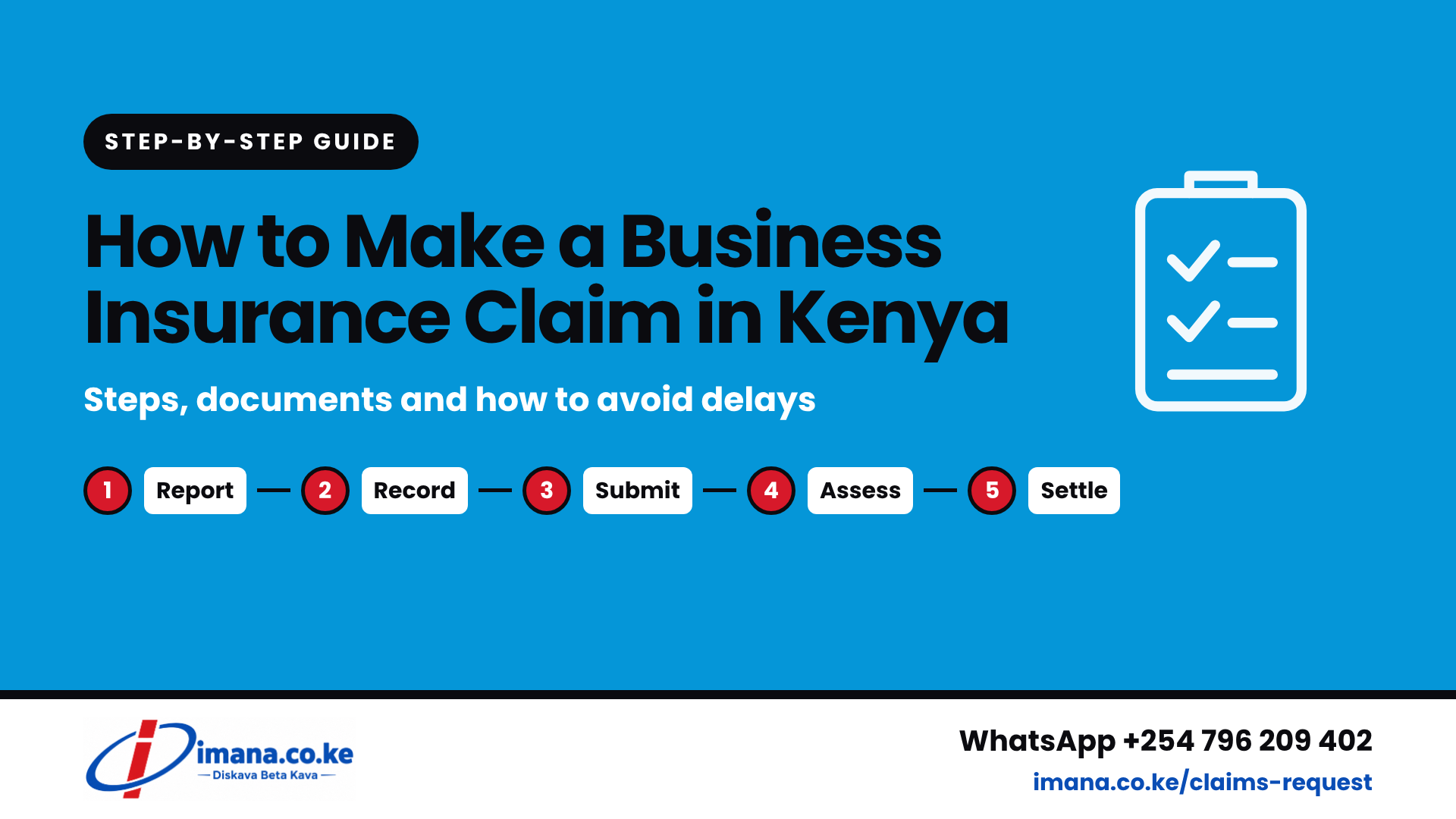
How to Make a Business Insurance Claim in Kenya
Learn how to make a business insurance claim in Kenya, which documents to prepare, how to avoid delays, and where to get claims support.
Insurance claim process Kenya, business insurance claim documents, motor insurance claim Kenya, WIBA claim process
How to Make a Business Insurance Claim in Kenya: Steps and Documents
Author: Raymond Momanyi, Founder & CEO, Imana Insurance Agency Kenya Ltd
A fire damages your stock. A delivery vehicle is involved in an accident. An employee gets injured at work. A shipment arrives with missing or damaged goods.
These are moments when business insurance becomes more than a policy document. You need to know what to do, who to contact and which records to prepare.
The insurance claim process in Kenya varies by policy and type of loss, but the foundations are similar: protect people, report promptly, preserve evidence and cooperate with the assessment.
This guide explains the main steps, the documents commonly requested and how to respond if your claim is delayed or declined.
What Is a Business Insurance Claim?
A business insurance claim is a formal request to an insurer for compensation or another benefit following an event covered by your policy.
Depending on the insurance, settlement may involve repairing damaged property, replacing insured items, paying an agreed benefit or meeting covered third-party liabilities.
Reporting a loss does not automatically mean the claim will be paid. The insurer must establish whether the event falls within the policy and determine the amount payable under its terms.
For an overview of the available covers, read our guide to corporate insurance Kenya.
Step 1: Protect People and Report the Incident Promptly
Your first priority is safety.
Arrange emergency medical assistance where needed, evacuate unsafe premises and contact the relevant emergency services. Do not put yourself or employees at risk to photograph damage or rescue stock.
Once immediate danger is addressed, notify your insurer or insurance intermediary as soon as possible.
Provide the information available, including:
- Your business name and policy number, if accessible.
- The date, time and location of the incident.
- A brief factual description of what happened.
- Details of injuries, damaged property or affected goods.
- Your contact details and any emergency action already taken.
Do not wait until every document is ready before reporting the loss. Initial notification and submission of supporting documents can happen in stages.
Ask for written acknowledgement, a claim reference number and guidance on the next steps. If you report by phone or WhatsApp, follow up through the insurer’s required notification channel.
If insured through Imana, call or WhatsApp +254 796 209 402 or submit your details through the claims request page.
Report to the Relevant Authorities
Theft, burglary and road accidents may require police reporting and a police abstract or other supporting records.
Workplace injuries also involve statutory reporting obligations. Under section 22 of the Work Injury Benefits Act, an employer generally must report an accident to the Director within seven days of receiving notice or learning of the injury. Fatal accidents have additional urgent notification requirements. Reporting to the insurer does not replace reporting to the Directorate of Occupational Safety and Health Services. new.kenyalaw.org
Step 2: Prevent Further Loss and Preserve Evidence
Take reasonable steps to prevent the damage from getting worse.
For example, you may need to secure a broken entrance, move undamaged stock away from water or arrange safe recovery of a vehicle.
Where safe and practical:
- Photograph the scene and affected items before moving them.
- Record videos showing the extent of the damage.
- Prepare an initial list of damaged, missing or stolen property.
- Keep receipts for emergency expenses.
- Record witness names and contact details.
- Preserve relevant CCTV footage, delivery records and correspondence.
Keep damaged items available for inspection where possible. Before disposing of unsafe or perishable goods, document their condition and seek instructions from the insurer and relevant authorities.
Obtain approval before permanent repairs or replacement. If emergency action is necessary for safety or to limit further loss, record why it was needed and retain the supporting evidence.
Step 3: Complete the Claim Form and Submit Supporting Documents
Request the correct claim form and a written document checklist from your insurer.
Complete the form accurately. Keep your account factual and distinguish what you personally observed from information provided by others.
If a detail is unknown, say so. Guessing the cause of a fire, the value of missing stock or the circumstances of an accident can create inconsistencies later.
Keep copies of everything submitted and a record of submission dates. If a requested document is unavailable, explain the situation and ask whether alternative evidence is acceptable.
The following checklists show documents commonly requested. The insurer may require additional information depending on the claim.
Motor Accident Claims
Common requirements include:
- Completed motor claim form.
- Police abstract or relevant police records.
- Copy of the vehicle logbook or ownership documents.
- Driving licence of the person driving.
- Photographs of the vehicle and accident scene.
- Repair estimate from an acceptable garage.
- Driver’s statement and witness details, where available.
Confirm the approved garage, assessment arrangements and repair authorisation before work begins.
Third-party-only insurance generally does not cover accidental damage to your own vehicle. The applicable cover must be checked first.
Motor Theft Claims
An insurer may request:
- Completed theft claim form and a detailed statement.
- Police abstract and investigation updates.
- Vehicle ownership documents.
- Available original and spare keys.
- Tracking or recovery reports, where applicable.
- Purchase, valuation or financing documents.
Original documents or ownership transfer papers may be required later. Confirm the purpose and obtain acknowledgement when handing them over.
Fire and Property Damage Claims
Common documents include:
- Completed claim form.
- Photographs and videos of the damage.
- Fire brigade or incident report, if available.
- Schedule of damaged buildings, equipment, contents and stock.
- Purchase invoices, stock records or other evidence of ownership and value.
- Repair estimates or replacement quotations.
- Records of emergency expenses.
Separate damaged items from undamaged property and avoid counting the same loss twice.
Burglary Claims
Prepare:
- Completed claim form.
- Police abstract or relevant police records.
- List of stolen items, quantities and values.
- Receipts, invoices, asset registers or stock records.
- Photographs showing damage and the apparent point of entry.
- Available CCTV footage and witness statements.
- Security records, where requested.
The insurer will assess the circumstances against the policy’s definition of burglary. Not every theft or unexplained shortage falls within burglary cover.
WIBA Claims
For work-related injuries or occupational diseases, documents may include:
- Insurer’s claim form.
- Prescribed DOSH notification and supporting forms.
- Employer’s incident report.
- Employee identification and employment details.
- Wage or payroll records.
- Medical reports, treatment notes and receipts.
- Medical assessment and DOSH assessment documents, where applicable.
For fatal claims, additional records may include a death certificate, burial permit and documents relating to eligible dependants.
Follow both the insurer’s process and the applicable statutory procedure.
Group Personal Accident Claims
Group Personal Accident insurance has its own benefits and requirements. It should not be treated as identical to WIBA.
Common documents include:
- Completed claim form.
- Description of the accident.
- Medical reports and treatment receipts.
- Police records where relevant.
- Evidence supporting a disability or temporary incapacity claim.
- Death and beneficiary documentation for fatal claims, where applicable.
The required evidence depends on the benefit being claimed.
Marine Cargo Claims
An insurer or surveyor may request:
- Completed claim form or written claim notification.
- Insurance certificate or policy details.
- Bill of lading, airway bill or relevant transport document.
- Commercial invoice and packing list.
- Delivery notes, shortage records or damage remarks.
- Photographs and survey report, where available.
- Written notification of loss to the carrier or other responsible party.
Where possible, record visible damage or shortages on delivery documents before signing.
Notify the insurer promptly so that a survey can be arranged and any recovery rights against the carrier can be protected.
Public Liability Claims
Common requirements include:
- Completed claim form and factual incident report.
- Third party’s demand letter or claim correspondence.
- Court papers, if proceedings have started.
- Photographs, CCTV footage and witness details.
- Relevant contracts, maintenance records or inspection logs.
Forward legal documents immediately. Court deadlines continue to run while the insurer reviews the claim.
Avoid admitting liability, promising payment or negotiating a settlement without the insurer’s consent. Providing emergency assistance and reporting facts accurately should remain a priority.
Business Interruption Claims
Business interruption claims often require financial evidence as well as documentation of the event that disrupted operations.
Prepare:
- Claim form and details of the underlying damage.
- Management accounts and available audited financial statements.
- Sales, turnover and expense records.
- Payroll and continuing cost records.
- Evidence showing the interruption period.
- Details of measures taken to reduce the loss.
- Records supporting additional expenses claimed.
Cover often depends on an insured physical damage event, although policy arrangements differ. A fall in sales or temporary closure alone does not establish a valid claim.
Step 4: Cooperate with the Assessment
Depending on the claim, the insurer may appoint an assessor, investigator, surveyor, medical specialist or loss adjuster.
They may inspect the damage, review records, obtain statements or request clarification.
Ask:
- Who is handling the assessment?
- What information is still outstanding?
- Is inspection required before repairs or disposal?
- What is the expected next step?
Assessment and document collection can happen at the same time. You do not necessarily need every supporting record before an inspection can be arranged.
An assessor’s visit is also not confirmation that the insurer has accepted liability.
Step 5: Review the Settlement Before Accepting It
If the claim is approved, ask for a clear explanation of the settlement calculation.
The amount may be affected by:
- The applicable policy limit or sum insured.
- The excess or deductible.
- Underinsurance provisions.
- Depreciation or the agreed settlement basis.
- Salvage arrangements.
- Other relevant policy terms.
Settlement may involve direct payment, authorised repairs, replacement or another agreed method.
Some claims involve a discharge voucher or settlement agreement. Read it carefully, particularly if it describes the payment as a full and final settlement.
If the amount or wording is unclear, request clarification before signing.
What Can Delay, Reduce or Prevent Payment?
Claims can be delayed by missing evidence, investigation, complex valuation issues, disputes over cover or slow communication. Responsibility does not always lie with the policyholder.
However, businesses can reduce avoidable problems by paying attention to the following areas.
Late Notification
Delayed reporting can make investigation more difficult and may breach policy conditions.
Report promptly, even where the full extent of the loss is still unknown.
Incomplete or Inconsistent Records
Missing invoices, conflicting statements or unexplained differences in stock figures can require further investigation.
Maintain organised business records and correct errors openly.
Underinsurance
Where an average clause applies, insuring property below the required value may reduce the claim payment proportionately.
For example, if property that should be insured for KSh 10 million is insured for KSh 5 million, a covered partial loss may be reduced under the clause before other deductions.
The exact calculation depends on the wording.
Losses Outside the Policy
A policy only responds to the risks and benefits it covers.
Examples may include own-vehicle damage under third-party-only motor insurance, ordinary wear and tear, or theft that does not meet the burglary definition.
Undeclared Changes
A change in premises, business activities, vehicle use or other material circumstances may affect cover.
Tell your insurer or intermediary when the business changes.
Premium or Policy Status Issues
Confirm that cover was in force when the event occurred and retain payment records.
If there is a dispute over premium payment or the start date of cover, ask for the relevant records and policy basis in writing.
Unauthorised Repairs or Settlements
Permanent repairs, disposal of evidence or agreements with third parties can complicate assessment and prejudice the insurer’s position.
Obtain instructions and keep written records of approvals.
How Imana Helps with Business Insurance Claims
For clients insured through Imana Insurance Agency Kenya Ltd, we help explain the process, identify the required documents, submit information and follow up with the insurer and appointed professionals.
We also help clients understand requests for additional evidence and seek clarification on settlement proposals.
Insured elsewhere? Imana offers free claims support to businesses and individuals seeking help with an insurance claim. Share your details through our claims request page so we can review how we may assist.
Where liaison with another insurer is needed, your written authority and relevant records may be required. Assistance does not guarantee approval or a particular settlement amount.
Frequently Asked Questions
How long does a business insurance claim take in Kenya?
There is no single practical turnaround time for every claim.
The duration depends on the type of loss, policy requirements, available evidence, assessment and any dispute over liability or value.
Ask for written updates identifying what remains outstanding, who needs to act and when the next update is expected.
Can I report a claim before obtaining a police abstract?
Yes. Notify the insurer promptly using the information available, then provide the abstract or other required records when obtained.
Do not delay initial reporting while collecting documents.
What is an insurance excess?
An excess is the portion of a covered claim that the policyholder bears.
For example, if an approved repair claim is KSh 150,000 and the applicable excess is KSh 20,000, the insurer’s contribution would be KSh 130,000, assuming no other deductions.
Some excesses are percentage-based or subject to a minimum amount.
Can I choose my own garage or repairer?
This depends on the insurer and policy.
Some arrangements use approved repairers, while others allow a nominated repairer subject to assessment and agreement. Obtain approval before authorising work.
What should I do if my claim is delayed?
Request a written status update and a list of outstanding requirements.
Keep a timeline of submissions and follow-ups. If the matter remains unresolved, use the insurer’s formal complaints process.
You can also lodge an unresolved insurance complaint through the IRA - Insurance Regulatory Authority
What if my claim is declined?
Ask for the decision in writing, including the facts and policy clauses relied on.
Review the explanation against your schedule, wording, endorsements and submitted evidence. If relevant information was overlooked, request reconsideration and provide the supporting records.
Unresolved complaints can be escalated to IRA. A disputed claim may also require independent professional or legal advice.
Does submitting a claim through Imana guarantee payment?
No. The insurer assesses the claim under the policy.
Imana helps with documentation, communication and follow-up, while applicable complaint and legal routes remain available where a decision is disputed.
Need Help with a Business Insurance Claim?
When a loss interrupts your business, clear guidance can make the next step easier.
Whether you are dealing with an accident, fire, burglary, work injury or damaged shipment, start by reporting promptly and preserving the evidence.
Submit a claim assistance request
Call/WhatsApp: +254 796 209 402
Office: 4th Floor, Krishna Centre, Woodvale Grove, Westlands, Nairobi.
Reviewing your protection? Read our corporate insurance guide or request a business insurance quotation.
imanainsurance.com | imana.co.ke
DISKAVA BETA KAVA
Every claim is assessed under the applicable policy terms, conditions, limits and exclusions, together with relevant legal requirements.